|
September 2026 | תשרי תשפ"ז |
| |
|
Holidays and Occasions – חַגִּים וּמוֹעֲדִים
|
| |
|
מַדּוּעַ הָיְתָה הִתְנַגְּדוּת לַבְּרָכָה "חַג שָׂמֵחַ"? Why Did the Greeting “חַג שָׂמֵחַ” Face Opposition? |
| |
|
A short passage in Leshonenu La'Am 2:7 (1951), pp. 28–29, is telling. There, amid assorted Hebrew queries – to which the Language Committee’s academic secretariat replies – is a Jerusalemite’s proposal to ban the popular greeting חַג שָׂמֵחַ, “a translation from a foreign tongue.” The origin of the greeting was apparently not the only objection to it, because the academic secretariat’s reply begins by addressing a different issue: whether the adjective שָׂמֵחַ may rightly describe anything but a person. |
| |
|
The reply defends the use of שָׂמֵחַ to describe inanimate nouns, citing JT H̱agiga 2:1, 77b: יוֹשְׁבִין הָיִינוּ וְחוֹזְרִין בְּדִבְרֵי תוֹרָה...וְהָיוּ הַדְּבָרִים שְׂמֵחִים כִּנְתִינָתָן מִסִּינַי, ‘we were sitting and reviewing words of Tora…, and the words were as joyful (Ms. Leiden: שמיחים) as when they were given from Sinai.’ The reply further notes that the adjective שָׂמֵחַ is in fact attested as a descriptor of holidays: מִפְּנֵי מָה מוֹעֲדִים שֶׁבְּבָבֶל שְׂמֵחִים?, ‘Why are the holidays in Babylonia [more] joyous [than those in the Land of Israel]?’ (BT Shabbat 145b). Saying חַג שָׂמֵחַ is therefore permissible in Hebrew, it concludes, adding that the phrase is not necessarily a translation from a foreign language. |
| |
|
Opposition nonetheless persisted. Hebrew innovator and style editor Isaac Avinery weighs in on חַג שָׂמֵחַ in his 1964 opus Yad HaLashon (p. 170), explaining that some regard it as a Yiddishism and reject it. He himself avers that Hebrew almost certainly borrowed the phrase from the Yiddish blessing אַ פֿריילעכן יום־טובֿ (German has a similar one: Frohes Fest) but does not consider this origin disqualifying. In defense of using שָׂמֵחַ to describe a holiday, he too cites BT Shabbat 145b, as well as the blessing פֶּסַח כָּשֵׁר וְשָׂמֵחַ. He argues that in some circumstances – e.g., for the short holiday of Shavu'ot – חַג שָׂמֵחַ may even be more apt than the traditional greeting מוֹעֲדִים לְשִׂמְחָה. |
| |
|
Hebrew sources connecting the root שׂמ"ח with the word חַג actually occur in the Bible as well: the laws of Sukkot directly link the two in Deut. 16:14–15, saying וְשָׂמַחְתָּ בְּחַגֶּךָ, ‘And you shall rejoice on your festival,’ and וְהָיִיתָ אַךְ שָׂמֵחַ, ‘and you shall be only joyful.’ However, the Biblical examples attribute the action or state expressed by שׂמ"ח to a person, not to the holiday. |
| |
|
Today the history of opposition to חַג שָׂמֵחַ seems almost fanciful, both because the blessing is so entrenched and because the multiplicity of customs about when to use it seems to bespeak a longstanding institution: while some speakers use the blessing for nearly every holiday, others limit it to Passover, Shavu'ot, and Sukkot, because in the Bible the term חַג refers only to those three festivals; some extend the greeting on Rosh HaShana as well, on the basis of Psalms 81:4, תִּקְעוּ בַחֹדֶשׁ שׁוֹפָר, בַּכֵּסֶה לְיוֹם חַגֵּנוּ, ‘Blow the shofar upon the new moon, upon כֵּסֶה for our feast day,’ per the opinion that כֵּסֶה refers to Rosh HaShana; and some hold that חַג שָׂמֵחַ befits only festival days when מְלָאכָה (creative labor) is prohibited, so they use a different greeting for H̱ol HaMo'ed. |
| |
|
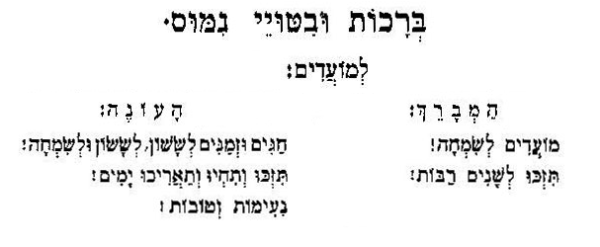
The greeting מוֹעֲדִים לְשִׂמְחָה, traditional in Ashkenazic and Sephardic communities alike, serves throughout the holiday, though nowadays one hears it especially on H̱ol HaMo'ed (in lieu of חַג שָׂמֵחַ). The greeting מוֹעֲדִים לְשִׂמְחָה and response חַגִּים וּזְמַנִּים לְשָׂשׂוֹן, which do appear in the Language Committee’s 1928 list, are an excerpt from the holiday liturgy (the amida and the evening kiddush): “[You have lovingly given us…] appointed times for rejoicing, festivals and designated times for celebrating….” |
| |
|
A greeting traditional among Middle Eastern and Yemenite Jews is תִּזְכּוּ לְשָׁנִים רַבּוֹת, ‘May you merit many years’; in some communities it serves primarily on the High Holidays, and in others – on the three festivals. Middle Eastern Jews also use the variant תִּזְכּוּ לְשָׁנִים רַבּוֹת וּנְעִימוֹת, adding ‘pleasant’; the recipient responds by wishing a long life – תִּזְכּוּ וְתִחְיוּ וְתַאֲרִיכוּ יָמִים. Meanwhile, one Yemenite variant expands the greeting into תִּזְכּוּ לְשָׁנִים רַבּוֹת וּמוֹעֲדִים טוֹבִים, adding a wish for good holidays; the recipient responds with בְּחַיֶּיךָ וּבְיָמֶיךָ הַטּוֹבִים, wishing the greeter a good life. |
| |
|
While חַג שָׂמֵחַ may have secured its status as a standard holiday greeting, the drab response to it – an echoed חַג שָׂמֵחַ or some form of “same to you” – falls short beside traditional formulas in which the response riffs on the greeting, as in the examples above, or one-ups it, as when one responds to שָׁלוֹם with שָׁלוֹם וּבְרָכָה or to שַׁבַּת שָׁלוֹם with שַׁבַּת שָׁלוֹם וּמְבֹרָךְ. Avinery’s suggested response to חַג שָׂמֵחַ – namely, יוֹם טוֹב, ‘good day’ (from the Yiddish greeting אַ גוט יום־טובֿ, a gut yontiv, ‘a good holiday,’ minus the טוב of yontiv to avoid repetition of טוֹב in Hebrew) – does not quite make the grade; it has not caught on. |
| |
|
Whichever holiday greeting you prefer, we wish you and yours all the blessings above and one more (a traditional greeting particular to Sukkot and Passover): מוֹעֲדִים לְשָׁלוֹם! |
| |
|
News and Events – חֲדָשׁוֹת וְאֵרוּעִים
|
| |
|
שְׁתֵּי הִשְׁתַּלְּמוּיוֹת מְקֻוָּנוֹת יִפָּתְחוּ בְּקָרוֹב: "הֲבָנַת הַמִּקְרָא – עִיּוּנֵי לָשׁוֹן בְּפָרָשׁוֹת הַשָּׁבוּעַ"; "תַּחְבִּיר, מַשְׁמָעוּת וְנִסּוּחַ" Two Online Courses to Open Soon: “Understanding the Bible” and “Syntax, Meaning, and Wording” |
| |
|
Two new online courses will begin in October. “Understanding the Bible: Linguistic Investigations in the Weekly Portions” will delve into linguistic matters of interest in the weekly Tora portion; “Syntax, Meaning, and Wording” will look at the fundamentals of syntax through the prisms of grammar, semantics, and pragmatics, also examining message structure. Both courses will be taught in Hebrew. “Understanding the Bible” will meet weekly on Friday mornings at 10:30 Israel time and run for a year; participants may register for the entire course or for individual books of the Pentateuch. The first session, on October 9, will be open to the public, free of charge. “Syntax, Meaning, and Wording” will meet twice a week in October and November, on Sunday and Wednesday evenings at 19:00 IT, for a total of 12 sessions. |
| |
|